


Hey there, fellow stargazers! As a supplier for the Dome Astronomical Observatory, I'm super excited to share with you some top - notch equipment that'll take your astrophotography game to the next level. Whether you're a newbie just starting out or a seasoned pro looking to upgrade, this guide is for you.
Let's kick things off with the heart of any astrophotography setup: the telescope. A good telescope is like a magic portal to the universe, allowing you to capture those distant galaxies and nebulae in all their glory. For beginners, I'd highly recommend a refractor telescope. They're relatively easy to use and maintain, and they offer great image quality right out of the box. Brands like Celestron and Meade have some awesome refractor models that won't break the bank.
Now, if you're more advanced and want to get into deep - sky astrophotography, a reflector telescope might be your best bet. Reflectors are known for their large apertures, which means they can gather more light and show you fainter objects. Dobsonian reflectors are especially popular because they're very stable and offer a wide field of view. Just imagine capturing the Orion Nebula with one of these bad boys! You can learn more about different telescope domes suitable for various types of telescopes on our Telescope Dome page.
Next up, we've got the mount. The mount is what keeps your telescope steady and allows you to track the movement of the stars. There are two main types: equatorial mounts and alt - azimuth mounts. Equatorial mounts are great for astrophotography because they can compensate for the Earth's rotation, which is crucial when taking long - exposure photos. They're a bit more complicated to set up than alt - azimuth mounts, but the results are well worth it. On the other hand, alt - azimuth mounts are simpler and more intuitive, making them a good choice for casual stargazing and short - exposure photography. You can find some excellent mounts that are specifically designed for observatory use on our Observatory Dome page.
Of course, you can't forget about the camera. A DSLR or a mirrorless camera is a popular choice for astrophotography. These cameras give you a lot of control over settings like aperture, shutter speed, and ISO, which are essential for getting the perfect shot. You can also use a dedicated astronomy camera, which is designed specifically for capturing celestial objects. These cameras often have features like high - sensitivity sensors and cooling systems to reduce noise in your images.
Filters are another important piece of equipment. They can help you enhance the colors and details in your astrophotos. For example, a light - pollution filter can block out the unwanted light from cities and streetlights, making it easier to see and photograph faint objects. There are also filters for specific wavelengths of light, like hydrogen - alpha filters, which are great for capturing nebulae.
Don't overlook the importance of a good tripod. A sturdy tripod will keep your camera or telescope stable, preventing blurry images. Look for a tripod that's made of high - quality materials and has adjustable legs for different terrains.
Now, let's talk about software. There's a ton of great software out there that can help you plan your astrophotography sessions, control your equipment, and process your images. Programs like Stellarium are free and allow you to see what the night sky will look like from your location at any given time. This is super useful for planning which objects you want to photograph. For image processing, Adobe Photoshop and PixInsight are popular choices. They have powerful tools that can help you adjust colors, remove noise, and enhance details in your astrophotos.

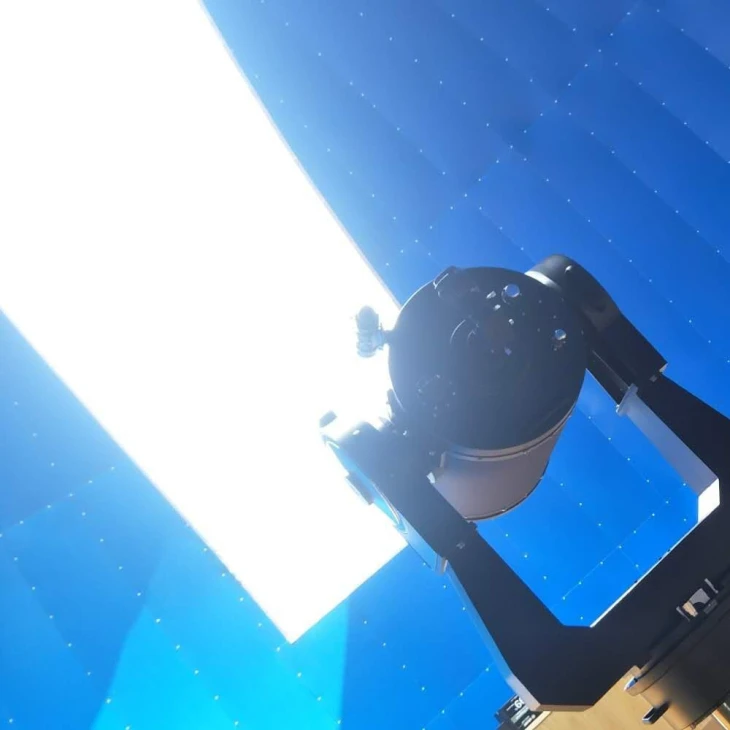
If you're setting up an observatory, you'll also need to think about the dome itself. An observatory dome protects your equipment from the elements and allows you to rotate your telescope to different parts of the sky. Our Astronomical Observatory page has all the information you need about different types of observatory domes and how to choose the right one for your needs.
One more thing to consider is power supply. In a remote observatory, you might not have access to a regular electrical outlet. So, you'll need to think about using a generator or a solar power system. A good power supply is essential to keep your equipment running smoothly during long - night photography sessions.
So, there you have it! These are some of the top pieces of equipment I'd recommend for astrophotography at the Dome Astronomical Observatory. Whether you're just starting out or looking to upgrade your setup, I hope this guide has been helpful.
If you're interested in purchasing any of the equipment I've mentioned or have questions about setting up your own observatory, don't hesitate to reach out. We're here to help you every step of the way. Contact us for more information and to start a procurement discussion.
References:
- Celestron and Meade product manuals
- Stellarium user guide
- Adobe Photoshop and PixInsight documentation


