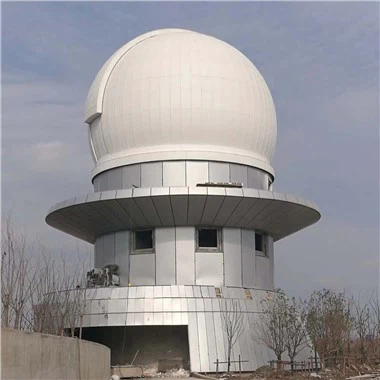
Hey there, space enthusiasts! As a supplier of Dome Planetariums, I often get asked about the power consumption of these amazing celestial showcases. So, let's dive right in and explore what goes into powering a dome planetarium.
First off, it's important to understand that the power consumption of a dome planetarium can vary quite a bit. There are several factors that play a role in determining how much electricity these setups use. One of the biggest factors is the type of projection equipment used.
When we talk about Astronomy Projection Equipment, there are different kinds available on the market. Traditional mechanical star projectors, for example, have been around for a long time. These machines work by using a series of gears, motors, and lamps to project stars onto the dome. The power consumption of these mechanical projectors can be relatively high because they need to run motors continuously to move the various parts and also power the bright lamps that create the starry effect.
On the other hand, modern digital projectors are becoming more and more popular. These Astronomy Planetarium Projectors use advanced technology to project high - resolution images of the night sky. Digital projectors generally have a lower power consumption compared to mechanical ones. This is because they don't rely on a lot of moving parts and can be more energy - efficient in terms of lighting. For instance, some of the latest LED - based digital projectors use less power while still providing a vivid and detailed display of the stars, planets, and other celestial objects.
Another factor that affects power consumption is the size of the dome. A larger dome will require more powerful projectors to cover the entire surface area. So, if you have a big - sized Dome Planetarium, you can expect it to use more electricity than a smaller one. The reason is simple: to project a clear and sharp image over a larger area, the projectors need to have higher brightness and resolution, which usually means more power.
The number of projectors also matters. In some large - scale dome planetariums, multiple projectors are used to create a seamless and immersive experience. Each projector adds to the overall power consumption. For example, a planetarium that uses four projectors will consume more power than one that uses just one or two.
Let's take a look at some rough estimates. A small - scale dome planetarium with a single, basic digital projector might consume around 300 - 500 watts per hour. This type of setup could be suitable for a small educational institution or a private home. On the other hand, a medium - sized planetarium with a couple of mid - range digital projectors could use anywhere from 1000 to 2000 watts per hour.
For large, professional - grade dome planetariums found in museums or science centers, the power consumption can be much higher. These setups might have multiple high - end projectors, along with additional equipment like sound systems, climate control, and interactive displays. In such cases, the power consumption could easily exceed 5000 watts per hour.


It's also important to consider the usage time. If a dome planetarium is open for long hours every day, the cumulative power consumption over a month or a year can be substantial. For example, if a planetarium with a power consumption of 1500 watts runs for 8 hours a day, it will use 12,000 watt - hours or 12 kilowatt - hours per day. Over a month (assuming 30 days), that's 360 kilowatt - hours.
Now, let's talk about ways to reduce power consumption. One option is to use energy - efficient projectors. As I mentioned earlier, LED - based digital projectors are a great choice. They not only use less power but also have a longer lifespan, which can save you money in the long run. Another way is to optimize the usage of the planetarium. You can schedule shows at specific times and turn off the equipment when it's not in use. Additionally, using smart power strips can help cut off standby power, which is the electricity that devices use even when they're turned off but still plugged in.
In conclusion, the power consumption of a dome planetarium depends on many factors such as the type of projection equipment, the size of the dome, the number of projectors, and the usage time. If you're in the market for a dome planetarium, it's crucial to consider these factors to make an informed decision.
If you're interested in purchasing a dome planetarium for your educational institution, museum, or even your home, we're here to help. We offer a wide range of Dome Planetariums with different power consumption levels to suit your needs and budget. Whether you're looking for a small, energy - efficient setup or a large, high - end planetarium, we've got you covered. Contact us to start a conversation about your requirements and let's work together to bring the wonders of the universe right into your space.
References
- "Handbook of Planetarium Technology"
- Industry reports on astronomy projection equipment energy efficiency