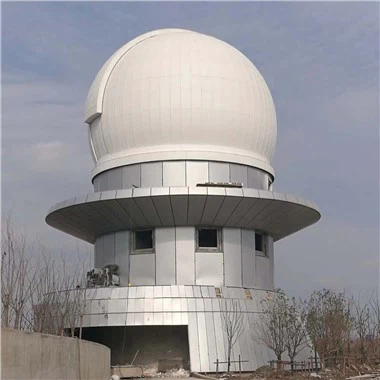
Hey there! As a supplier of 360 Digital Dome Screens, I've gotten a ton of questions about how our product stacks up against traditional planetarium domes. So, I thought I'd break it down for you in this blog post.
Visual Experience
Let's start with the visual experience. A traditional planetarium dome, like the Horizontal Metal Planetarium Dome, uses specialized projectors to create a realistic view of the night sky. These projectors are designed to mimic the way stars and celestial bodies appear from Earth. They can project constellations, planets, and even meteor showers with a high level of accuracy.
On the other hand, a 360 Digital Dome Screen takes the visual experience to a whole new level. It uses high - resolution digital projectors that can display not only the night sky but also a wide range of other content. You can show nature documentaries, immersive 3D movies, or even interactive educational programs. The digital technology allows for a much more vivid and detailed image. Colors are more vibrant, and the level of detail is often far superior to what you'd get with a traditional planetarium dome.
For example, if you're showing a documentary about the deep sea, a 360 Digital Dome Screen can bring the colorful coral reefs and strange sea creatures to life in a way that a planetarium dome just can't. The ability to display dynamic and diverse content makes the 360 Digital Dome Screen a more versatile option for educational institutions, museums, and entertainment venues.
Installation and Setup
When it comes to installation, traditional planetarium domes can be quite a hassle. They often require a large, dedicated space with specific structural requirements. The 10m Planetarium Dome, for instance, needs a lot of room and careful alignment of the projectors. The installation process can take weeks or even months, and it usually involves a team of specialized technicians.
In contrast, a 360 Digital Dome Screen is much easier to install. It can be set up in a variety of spaces, including existing auditoriums or large rooms. The modular design allows for quick assembly, and the digital projectors are relatively easy to calibrate. In many cases, you can have a 360 Digital Dome Screen up and running in a matter of days, which is a huge advantage if you're on a tight schedule.
Cost
Cost is always a major factor when considering any purchase. Traditional planetarium domes can be extremely expensive. The initial purchase price is high, and then there are the ongoing costs of maintenance, projector replacements, and software updates. The specialized projectors used in planetarium domes are costly to repair and replace, and the software for creating and displaying celestial content can also be pricey.
A 360 Digital Dome Screen, on the other hand, is generally more cost - effective. The initial investment is often lower, especially when you consider the versatility of the system. Since it uses standard digital projectors, the cost of replacement parts and maintenance is much more reasonable. And because you can use off - the - shelf software and content, there are fewer licensing fees and software development costs.
Audience Engagement
Audience engagement is crucial, whether you're running an educational program or an entertainment show. Traditional planetarium domes are great for teaching about astronomy, but their content is somewhat limited. Once the audience has seen the same constellations and celestial events a few times, the novelty can wear off.
The 360 Digital Dome Screen, however, offers endless possibilities for engagement. You can create interactive experiences where the audience can control the content, ask questions, and participate in educational games. For example, you could have a virtual tour of the solar system where the audience can choose which planet to visit next. This level of interactivity keeps the audience engaged and coming back for more.
Content Creation
Creating content for a traditional planetarium dome can be a complex and time - consuming process. You need specialized software and knowledge of astronomy to create accurate celestial displays. There are also limitations to the types of content you can create, mainly focusing on astronomical phenomena.
With a 360 Digital Dome Screen, content creation is much more accessible. There are many software tools available that allow you to create and edit 3D content, import videos, and add interactive elements. You can collaborate with content creators from different fields, such as graphic designers, animators, and educators, to develop unique and engaging content.
Durability and Longevity
Traditional planetarium domes are built to last, but they do require regular maintenance. The projectors and other equipment can wear out over time, and the dome structure itself may need repairs due to environmental factors.
A 360 Digital Dome Screen is also durable, but it has the advantage of being more easily upgradable. As technology advances, you can simply replace the digital projectors or update the software to improve the performance and visual quality. This means that your investment in a 360 Digital Dome Screen can stay relevant for a longer time.


Conclusion
In conclusion, while traditional planetarium domes have their place in astronomy education, the 360 Digital Dome Screen offers a more versatile, cost - effective, and engaging alternative. It provides a superior visual experience, is easier to install, and allows for a wider range of content creation.
If you're interested in learning more about our 360 Digital Dome Screens or are considering a purchase, I'd love to talk to you. Whether you're a school looking to enhance your science curriculum, a museum wanting to attract more visitors, or an entertainment venue seeking a new attraction, our 360 Digital Dome Screen could be the perfect solution. Feel free to reach out to discuss your specific needs and how we can help you make the most of this amazing technology.
References
- General knowledge of planetarium and digital dome screen technology from industry experience.
- Market research on the features and costs of different types of domes.