


Hey there, astronomy enthusiasts! I'm really excited to take you on a journey through the history of observatories in different countries. As a supplier of observatory equipment, I've had the privilege of diving deep into the rich past of these amazing places where humans have peered into the cosmos for centuries.
Let's start with ancient times. In Egypt, around 2500 BC, the Egyptians built observatories to study the stars. They were particularly interested in the star Sirius because its annual rising coincided with the flooding of the Nile River, which was crucial for their agriculture. These early observatories were simple structures, often just elevated platforms that allowed priests and astronomers to observe the night sky. The Egyptians used their observations to create calendars, which were essential for scheduling religious festivals and agricultural activities.
Moving on to Greece, around 300 BC, the Greeks made significant contributions to astronomy. The famous philosopher Aristotle proposed a geocentric model of the universe, where the Earth was at the center. Observatories in Greece, like the one on the island of Rhodes, were used to test and refine these theories. Greek astronomers used various instruments, such as the astrolabe, to measure the positions of stars and planets. Their work laid the foundation for Western astronomy.

Fast forward to the Islamic Golden Age, from the 8th to the 14th century. Islamic astronomers built some of the most advanced observatories of their time. The Maragheh Observatory in present - day Iran, established in the 13th century, was a major center of astronomical research. It had a large library, a state - of - the - art observatory, and a team of brilliant scientists. These astronomers made accurate measurements of the positions of stars and planets, and they also translated and preserved many ancient Greek astronomical texts. Their work was later transmitted to Europe, helping to spark the Renaissance in astronomy.
In Europe, the 16th and 17th centuries were a time of great change in astronomy. Nicolaus Copernicus proposed a heliocentric model of the universe, where the Sun was at the center. This was a revolutionary idea that challenged the traditional geocentric view. Galileo Galilei used a telescope to make groundbreaking observations, such as the discovery of the moons of Jupiter. The Uraniborg Observatory in Denmark, built by Tycho Brahe in the 16th century, was one of the most important observatories of this era. Brahe made extremely accurate naked - eye observations of the stars and planets, which were later used by Johannes Kepler to formulate his laws of planetary motion.
In the United States, the Lick Observatory, established in 1888 on Mount Hamilton in California, was a significant milestone. It was the first permanently occupied mountaintop observatory in the world. The Lick Observatory had a large refracting telescope, which was the largest in the world at the time. This allowed astronomers to make detailed observations of distant stars and galaxies. Since then, the US has become a leader in astronomical research, with many world - class observatories like the Hubble Space Telescope and the Keck Observatory in Hawaii.
Now, let's talk about some other countries. In Australia, the Anglo - Australian Observatory, founded in the 1960s, has been a key player in southern hemisphere astronomy. It has a large telescope that has been used to study everything from nearby stars to distant quasars. In China, the Purple Mountain Observatory, established in 1934, is one of the oldest modern observatories in the country. It has made important contributions to solar physics, astrometry, and celestial mechanics.
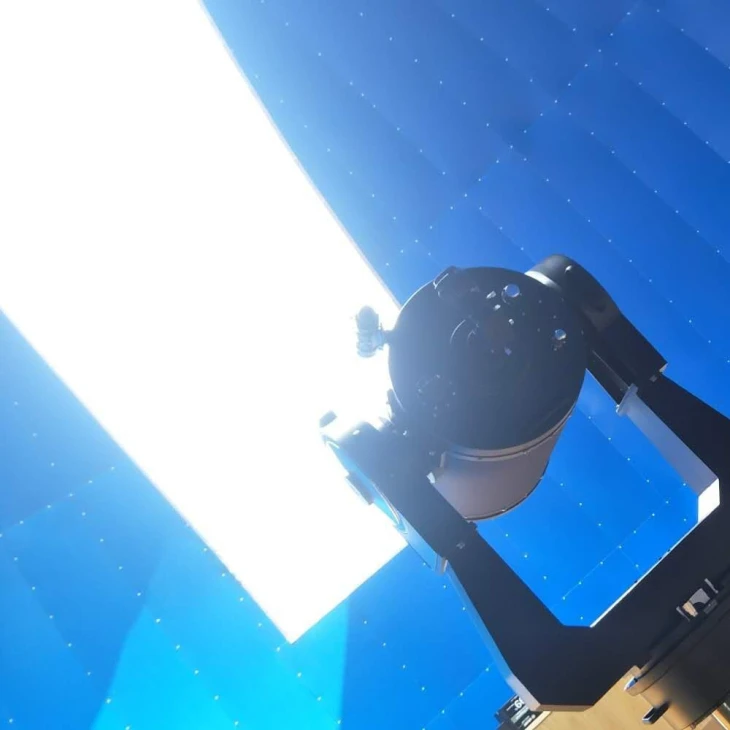
As an observatory supplier, I'm always fascinated by how these historical observatories have evolved over time. Today, we have access to much more advanced technology than ever before. For example, our The Fully Open Astronomical Dome is a state - of - the - art solution that provides a great environment for astronomical observations. It allows for maximum visibility of the sky and is designed to protect the sensitive equipment inside.
Our Telescope Observatory is another product that combines the latest technology with practical design. It can be customized to meet the specific needs of different astronomers, whether they are professional researchers or amateur stargazers. And our Astronomical Observatory is a comprehensive solution that includes everything from the building structure to the telescope and associated equipment.
If you're interested in setting up your own observatory, whether it's for a school, a research institution, or just for personal use, I'd love to talk to you. We have a wide range of products and services to meet your needs. We can help you choose the right equipment, design the layout of your observatory, and provide installation and maintenance support.
Contact us to start a conversation about your observatory project. Whether you're a beginner or an experienced astronomer, we're here to help you bring your astronomical dreams to life.
References
- "A History of Astronomy" by Michael Hoskin
- "Islamic Astronomy" by E. S. Kennedy
- "The Discoverers" by Daniel J. Boorstin


