


Can observatories be used for astrobiology research? Well, you bet they can! As a supplier of observatories, I've seen firsthand how these incredible structures are at the forefront of astrobiology research. In this blog, I'll dive into how observatories play a crucial role in the search for life beyond Earth.
First off, let's talk about what astrobiology is. Astrobiology is the study of the origin, evolution, distribution, and future of life in the universe. It's a multidisciplinary field that combines astronomy, biology, chemistry, geology, and more. The big question in astrobiology is whether there's life elsewhere in the universe, and observatories are key tools in answering that question.
Observatories come in different shapes and sizes, and each type has its own unique capabilities for astrobiology research. For instance, Astronomical Observatory are designed to observe celestial objects in various wavelengths of light. They can detect stars, planets, galaxies, and other astronomical phenomena. When it comes to astrobiology, these observatories can help us find exoplanets - planets that orbit stars outside our solar system.
Exoplanets are a hot topic in astrobiology because they could potentially harbor life. Astronomical observatories use different methods to detect exoplanets. One common method is the transit method, where the observatory looks for a dip in a star's brightness when a planet passes in front of it. Another method is the radial velocity method, which measures the wobble of a star caused by the gravitational pull of an orbiting planet. Once an exoplanet is detected, the observatory can then analyze its atmosphere to see if it has the right conditions for life.
Telescope Observatory are also essential for astrobiology research. These observatories house powerful telescopes that can magnify distant objects, allowing us to study them in more detail. Telescope observatories can be ground - based or space - based. Ground - based telescope observatories are located on Earth's surface and are often placed in remote locations with clear skies, like deserts or mountaintops.
Space - based telescope observatories, on the other hand, are placed in orbit around the Earth or in deep space. They have several advantages over ground - based observatories. For example, they're not affected by Earth's atmosphere, which can distort the light from celestial objects. This means they can get clearer images and more accurate data. Space - based telescope observatories like the Hubble Space Telescope and the James Webb Space Telescope have made significant contributions to astrobiology research by helping us study exoplanets and their atmospheres.
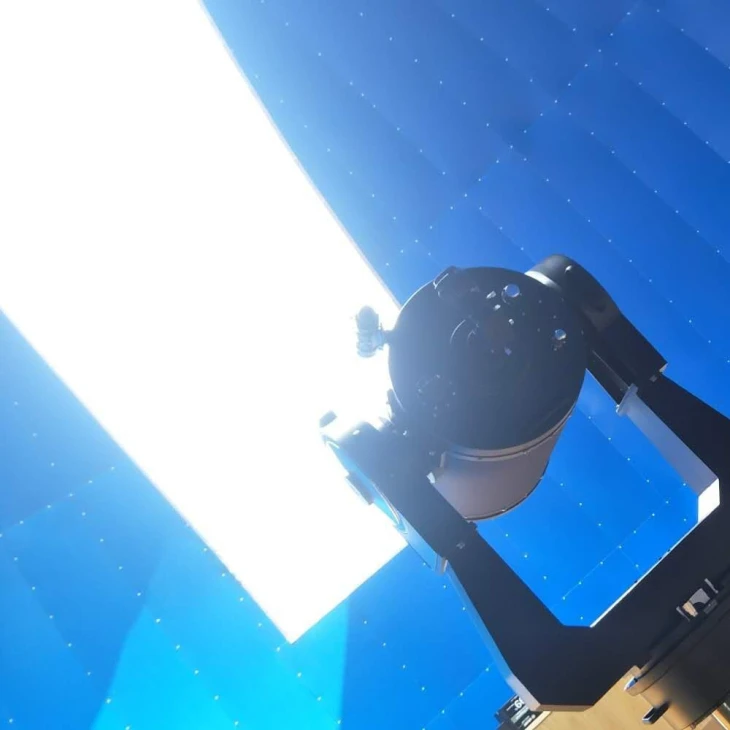

When it comes to analyzing an exoplanet's atmosphere, telescope observatories look for specific gases that could indicate the presence of life. For example, oxygen is a key gas because on Earth, it's produced by photosynthetic organisms. Methane is another important gas. On Earth, methane can be produced by living organisms, although it can also be produced by non - biological processes. By detecting these gases in an exoplanet's atmosphere, we can start to determine if the planet might be habitable.
Observatory Planetarium also have a role to play in astrobiology research. While they're often thought of as educational facilities, they can also be used for research purposes. Planetariums can simulate the conditions of different planets and exoplanets, allowing scientists to study how life might evolve under different environmental conditions.
For example, a planetarium can simulate the temperature, pressure, and atmospheric composition of a planet. Scientists can then introduce different types of organisms or organic molecules into the simulation to see how they would react. This kind of research can help us understand the range of conditions under which life can exist and what types of life forms might be possible on other planets.
In addition to detecting exoplanets and analyzing their atmospheres, observatories can also study other aspects of astrobiology. For example, they can look at the formation of stars and planets. The process of star and planet formation is important because it determines the initial conditions of a planet, such as its size, composition, and distance from its star. These factors can have a big impact on whether a planet can support life.
Observatories can also study comets and asteroids. Comets and asteroids are thought to have played a role in the origin of life on Earth. They could have brought water and organic molecules to our planet, which are essential for life. By studying comets and asteroids, we can learn more about the building blocks of life and how they might be distributed throughout the universe.
Another area where observatories are useful in astrobiology research is in the study of extremophiles on Earth. Extremophiles are organisms that can survive in extreme environments, such as hot springs, deep - sea vents, and frozen lakes. By studying these organisms, we can get an idea of the types of life that might exist on other planets with harsh conditions. Observatories can help us understand the environments on other planets and see if they're similar to the extreme environments on Earth where extremophiles live.
As a supplier of observatories, I'm excited about the potential of these facilities in astrobiology research. We offer a wide range of observatories, from small, portable telescopes for educational purposes to large, state - of - the - art astronomical observatories for professional research. Our observatories are built with the latest technology and are designed to provide accurate and reliable data for astrobiology research.
If you're involved in astrobiology research or are interested in starting a research project, I encourage you to consider our observatories. We can work with you to find the right observatory for your specific needs and budget. Whether you're looking for a ground - based telescope observatory to detect exoplanets or a planetarium to simulate planetary conditions, we've got you covered.
Contact us to start a conversation about your astrobiology research needs. We're here to help you take your research to the next level and contribute to the exciting field of astrobiology.
References
- "Astrobiology: A Multidisciplinary Approach" by Dirk Schulze - Makuch and Louis Irwin
- "Exoplanets and Alien Solar Systems" by Michael Summers and James Trefil
- Scientific papers from journals such as "Astrobiology" and "The Astrophysical Journal"


