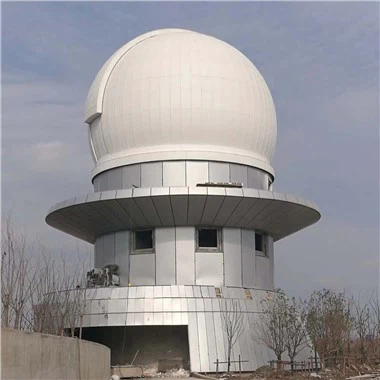
Hey there! As a supplier of Projection Domes, I often get asked whether these nifty devices can be used for scientific research. Well, the short answer is a resounding yes! In this blog post, I'll dive into how Projection Domes can be a game - changer in the world of scientific exploration.
First off, let's talk about what a Projection Dome is. A Projection Dome, as you can check out on Projection Dome, is a spherical or hemispherical structure onto which images, videos, and other visual content can be projected. It creates an immersive environment where viewers can feel like they're part of the scene.
Astronomy and Astrophysics
One of the most obvious areas where Projection Domes shine is in astronomy and astrophysics. Scientists can use these domes to recreate the night sky with astonishing accuracy. By projecting detailed star maps, constellations, and even simulations of celestial events like supernovae or eclipses, researchers can study the universe in a more immersive way.
For example, in a traditional observatory, astronomers are limited by the actual view of the sky, which can be affected by weather, light pollution, and the position of the Earth. But with a Projection Dome, they can simulate any part of the sky at any time. They can also manipulate variables such as the distance between celestial bodies, the speed of their movement, and the effects of different gravitational forces. This allows for in - depth studies that might not be possible in the real world.
Educational institutions can also benefit from this. Students can experience the wonders of the universe in a hands - on way, which can spark their interest in astronomy and potentially lead to future scientific breakthroughs. You can learn more about immersive experiences in Immersive Projection Dome Theaters.
Geology and Earth Sciences
Projection Domes can also play a crucial role in geology and earth sciences. Scientists can use them to create 3D models of the Earth's interior, including the mantle, core, and tectonic plates. By projecting data on how these structures interact, researchers can better understand phenomena like earthquakes and volcanic eruptions.
For instance, they can simulate the movement of tectonic plates over time, showing how continents have shifted and how mountains have formed. This kind of visualization can help in predicting future geological events and developing strategies to mitigate their impact.
In addition, geologists can use Projection Domes to study the Earth's surface features. They can project high - resolution satellite images of landscapes, including mountains, rivers, and deserts. By analyzing these images in an immersive environment, they can identify patterns and changes that might be difficult to spot on a flat screen.
Biology and Ecology
In the field of biology and ecology, Projection Domes offer unique opportunities for research. Biologists can use them to create virtual habitats for studying animal behavior. For example, they can project a realistic rainforest environment, complete with sounds of birds and insects, and observe how different species interact with each other.
This is especially useful for studying endangered species. Instead of disturbing their natural habitats, scientists can create a virtual version and conduct experiments in a controlled environment. They can also manipulate variables such as food availability, temperature, and the presence of predators to see how animals respond.
Ecologists can use Projection Domes to study the impact of climate change on ecosystems. They can project simulations of how rising sea levels, changing temperatures, and deforestation will affect different habitats. This can help in developing conservation strategies to protect the planet's biodiversity.


Psychology and Neuroscience
Projection Domes are not just useful for the natural sciences; they also have applications in psychology and neuroscience. Psychologists can use them to create immersive environments for studying human behavior. For example, they can project a virtual city street and observe how people react to different situations, such as crowded spaces or the presence of strangers.
Neuroscientists can use Projection Domes to study how the brain processes visual information in an immersive environment. By measuring brain activity while subjects are exposed to different projections, they can gain insights into how the brain creates a sense of presence and spatial awareness.
Advantages of Using Projection Domes in Research
There are several advantages to using Projection Domes in scientific research. Firstly, they offer a high level of immersion. Unlike traditional 2D displays, Projection Domes surround the viewer, creating a more realistic and engaging experience. This can lead to better understanding and more accurate data collection.
Secondly, Projection Domes are highly customizable. Researchers can project any kind of visual content, from simple graphs and charts to complex 3D models. They can also adjust the lighting, sound, and other environmental factors to create the perfect research environment.
Thirdly, Projection Domes are relatively easy to set up and use. They don't require a large amount of space or expensive equipment, making them accessible to a wide range of researchers.
Challenges and Limitations
Of course, there are also some challenges and limitations to using Projection Domes in scientific research. One of the main challenges is the cost. High - quality Projection Domes can be expensive to purchase and maintain. However, as technology advances, the cost is gradually coming down, making them more affordable for smaller research institutions.
Another challenge is the need for specialized software and technical expertise. Researchers need to be able to create and project the right kind of content, which may require some training. But there are many resources available online and in educational institutions to help with this.
Conclusion
In conclusion, Projection Domes have a wide range of applications in scientific research. They can be used in astronomy, geology, biology, psychology, and many other fields. They offer a high level of immersion, customization, and ease of use, which can lead to more accurate and in - depth research.
If you're a researcher or an institution interested in using Projection Domes for your scientific work, don't hesitate to reach out. We're here to provide you with the best Projection Dome solutions tailored to your specific needs. You can also explore more about Fulldome Theater to see if it fits your requirements.
References
- Various scientific studies on immersive visualization in research
- Industry reports on the use of Projection Domes in different fields