


As a supplier of Optical Planetarium Projectors, I often get asked about the resolution of these amazing devices. It's a crucial aspect that can significantly impact the quality of the starry skies projected in planetariums. So, let's dive into what the resolution of an optical planetarium projector's projection really means.
First off, resolution in the context of an optical planetarium projector refers to the level of detail and clarity with which the stars, constellations, and other celestial objects are projected onto the dome. Think of it like the sharpness of an image on your TV or computer screen. A higher resolution means you can see more stars, finer details of nebulae, and more accurate representations of the night sky.
The resolution of an optical planetarium projector is determined by several factors. One of the most important is the quality of the optics used in the projector. High - quality lenses and mirrors can focus the light more precisely, resulting in sharper and more distinct projections. The design of the star balls or star plates inside the projector also plays a big role. These are essentially templates with tiny holes or markings that represent the stars. The size and spacing of these holes determine how many stars can be projected and how well they can be distinguished from one another.
Let's talk about the different types of resolutions you might encounter in optical planetarium projectors. There's the angular resolution, which measures the smallest angle between two objects that can still be seen as separate. In a planetarium, a good angular resolution means you can clearly see two nearby stars as distinct points of light, rather than a single blurry blob. This is especially important for showing binary star systems or dense star clusters.
Another aspect is the spatial resolution, which relates to the ability to accurately project the positions of stars across the dome. A high spatial resolution ensures that the constellations are projected in the correct shapes and orientations, giving visitors a realistic view of the night sky. This is achieved through precise calibration and alignment of the projector's components.
Now, why does resolution matter so much in a planetarium? Well, for starters, it enhances the educational experience. When students or visitors can see the stars and celestial objects in high detail, they can better understand the structure of the universe, the relationships between different stars, and the movements of planets. It also makes the planetarium show more engaging and immersive. A sharp, clear projection of the night sky can transport people to another world, making them feel like they're floating among the stars.
As a supplier of Optical Planetarium Projectors, we're constantly working to improve the resolution of our projectors. We invest in the latest optical technologies and manufacturing processes to ensure that our projectors offer the best possible performance. Our engineers are always looking for ways to increase the number of stars that can be projected, improve the angular and spatial resolution, and reduce any distortion or blurring in the projection.
One of the challenges we face in improving resolution is balancing it with other factors such as cost and size. Higher - resolution projectors often require more advanced and expensive components, which can drive up the price. Additionally, more complex optics may make the projector larger and heavier, which can be a problem for smaller planetariums or those with limited space. But we're always trying to find the sweet spot where we can offer high - resolution projectors at a reasonable cost and in a manageable size.
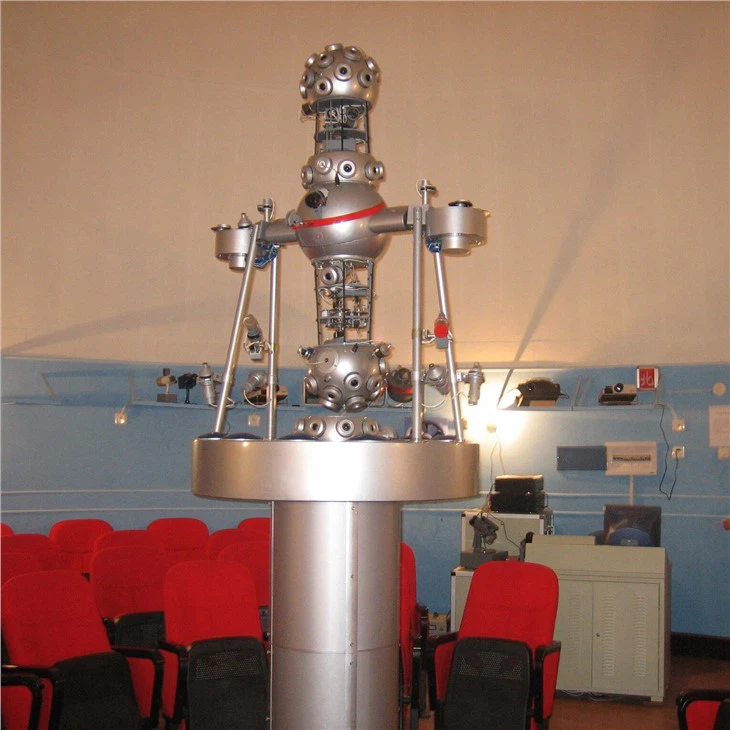

When choosing an optical planetarium projector, it's important to consider your specific needs and budget. If you're running a large, professional planetarium with high - end educational programs, you may want to invest in a projector with the highest possible resolution. On the other hand, if you're a smaller institution or a private user, you might be able to find a more affordable projector that still offers a decent level of resolution.
Our company offers a range of Optical Planetarium Projectors with different resolutions to suit various needs. Whether you're looking for a basic projector for a small school planetarium or a top - of - the - line model for a large science museum, we've got you covered. We also provide installation, calibration, and maintenance services to ensure that your projector is always performing at its best.
In addition to the resolution of the projector itself, the overall Planetarium System also plays a role in the quality of the projection. The dome material, the lighting conditions in the planetarium, and the software used to control the projector all interact with the projector's resolution to create the final viewing experience. For example, a high - quality dome material can help to reflect and diffuse the light from the projector more evenly, enhancing the clarity of the projection.
So, if you're in the market for an optical planetarium projector, don't just focus on the price. Consider the resolution and how it will impact the quality of your planetarium shows. A higher - resolution projector may cost more upfront, but it can provide a better educational experience and attract more visitors in the long run.
If you're interested in learning more about our optical planetarium projectors or have any questions about resolution or other features, feel free to reach out. We're here to help you choose the right projector for your needs and ensure that you get the most out of your investment. Whether you're a school, a museum, or a private enthusiast, we're committed to providing you with the best planetarium projection technology available.
In conclusion, the resolution of an optical planetarium projector's projection is a complex but crucial factor that can make or break the planetarium experience. By understanding the different types of resolutions and how they're determined, you can make an informed decision when choosing a projector. And as a leading supplier of optical planetarium projectors, we're here to support you every step of the way. So, if you're ready to take your planetarium to the next level, get in touch with us and let's start a conversation about your projection needs.
References
- General astronomy textbooks on celestial object projection and optics
- Industry reports on optical planetarium projector technology


