


Hey there, astronomy enthusiasts! I'm a supplier of astronomy projection equipment, and today, I wanna talk about a topic that doesn't get as much attention as it should: the noise level of astronomy projection equipment. You might be thinking, "Why does the noise matter when I'm trying to stargaze?" Well, let me tell you, it can make a huge difference in your overall experience.
First off, let's understand why noise can be an issue. When you're using astronomy projection equipment, whether it's in a home planetarium, a school classroom, or a professional observatory, you're usually in a quiet environment. The last thing you want is a loud, buzzing machine ruining the peaceful atmosphere. It can be distracting, especially if you're trying to focus on the beautiful celestial projections. Plus, if you're using the equipment for educational purposes, excessive noise can make it difficult for students to hear the instructor.
Now, let's take a look at the different types of astronomy projection equipment and their typical noise levels.
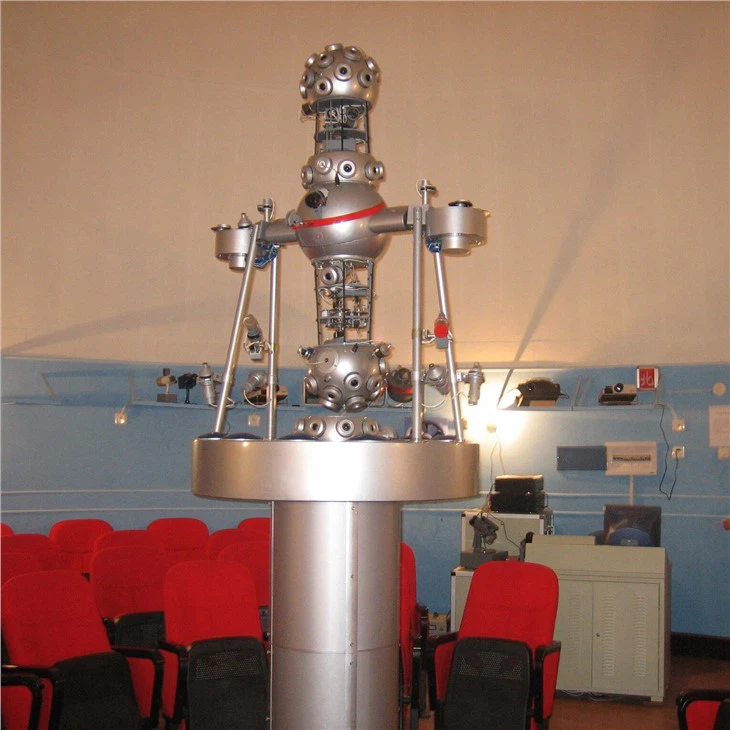

High Precision Star Ball Projector Planetarium
The High Precision Star Ball Projector Planetarium is a popular choice for home use. These projectors are designed to create a realistic starry sky inside a room. Most high - precision star ball projectors are relatively quiet. They usually have a noise level in the range of 20 - 30 decibels (dB). To put that into perspective, a whisper is about 30 dB. This low noise level is achieved through the use of high - quality motors and fans. The motors are designed to run smoothly, and the fans are optimized to cool the projector without creating too much noise.
The reason these projectors can be so quiet is that they don't have a lot of moving parts. The star ball itself rotates slowly, and the light source is usually a LED, which doesn't require a lot of power or generate a lot of heat. As a result, there's no need for a large, noisy cooling system.
Optical Planetarium Projector
Optical Planetarium Projectors are more complex and are often used in professional settings, like planetariums and science museums. These projectors use a combination of optics and mechanical parts to project accurate star maps and celestial phenomena. Due to their complexity, they tend to be a bit louder than star ball projectors.
The noise level of an optical planetarium projector can range from 40 - 50 dB. This is about the same as the noise level in a quiet library. The main sources of noise in these projectors are the motors that control the movement of the optical components and the fans that cool the light source. Since optical planetarium projectors use high - intensity light sources, such as xenon lamps, they generate a lot of heat. To prevent overheating, powerful fans are used, which can create some noise.
Planetarium Projector
Planetarium Projectors are a general term that can refer to a wide range of projection equipment. They can be used in various settings, from small home theaters to large - scale public planetariums. The noise level of planetarium projectors can vary widely depending on their size, complexity, and the technology they use.
Smaller, more basic planetarium projectors might have a noise level similar to star ball projectors, around 20 - 30 dB. On the other hand, larger, more advanced projectors used in professional planetariums can have noise levels up to 60 dB, which is comparable to the noise level of normal conversation.
So, how can you choose the right astronomy projection equipment based on noise level? Well, it depends on your specific needs. If you're using the projector in a small, quiet room at home, a low - noise star ball projector might be the best choice. You won't have to worry about the noise disturbing your stargazing experience.
If you're setting up a planetarium in a school or a public space, you might need to consider a more powerful projector, like an optical planetarium projector. In these cases, you can take steps to minimize the impact of the noise. For example, you can place the projector in a separate room or enclosure and use sound - insulating materials to reduce the noise.
Another factor to consider is the type of event or activity you're using the projector for. If it's a silent stargazing session, you'll definitely want a quieter projector. But if you're using the projector during a lecture or a presentation, a slightly louder projector might be acceptable as long as it doesn't interfere with the audio of the presentation.
As a supplier of astronomy projection equipment, I understand the importance of noise level. That's why we work hard to source and provide projectors that offer a good balance between performance and noise. We test all our products to ensure that they meet certain noise standards.
If you're interested in purchasing astronomy projection equipment, whether it's a high - precision star ball projector for your home or a professional optical planetarium projector for a large - scale facility, I'd love to talk to you. We can discuss your specific needs, including the ideal noise level for your situation. Don't hesitate to reach out and start a conversation about how we can help you create the perfect stargazing experience.
References
- "Handbook of Noise Measurement" by GenRad.
- "Acoustics: Sound Fields and Transducers" by Neville G. Fletcher and Thomas D. Rossing.


