


Hey there! As a supplier of 360 Digital Dome Screens, I often get asked if these nifty pieces of tech can be used in science centers. Well, let me tell you, the answer is a resounding yes! And in this blog, I'm gonna break down why these screens are a perfect fit for science centers.
First off, what exactly is a 360 Digital Dome Screen? It's basically a spherical or hemispherical screen that can display high - resolution images and videos all around, creating a fully immersive experience for the viewers. It's like stepping into a whole new world, and that's exactly what science centers are all about - making science come alive and engaging people of all ages.
Immersive Learning Experience
One of the main reasons 360 Digital Dome Screens are ideal for science centers is the immersive learning experience they offer. In a traditional science center, you might have static displays, maybe some interactive exhibits, but with a 360 Digital Dome Screen, you can transport visitors to different parts of the universe, deep into the ocean, or even inside the human body.

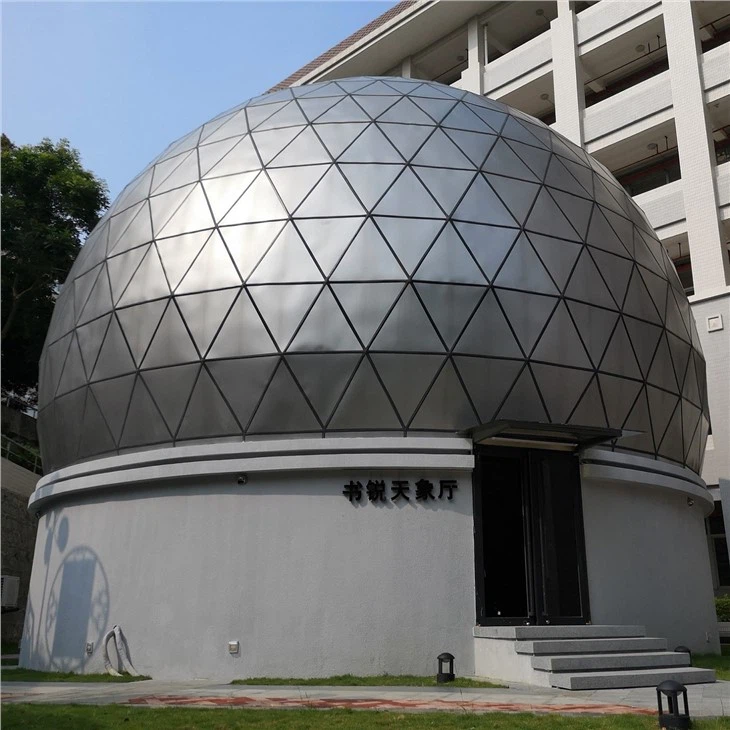
Imagine a visitor standing in the middle of a dome, looking up and around as they witness a virtual tour of the solar system. They can see the planets up close, watch as comets streak across the sky, and even experience the sensation of flying through space. This kind of immersive experience is far more engaging than just looking at a poster or a model. It helps visitors understand complex scientific concepts in a more intuitive way.
For example, when teaching about the water cycle, a 360 Digital Dome Screen can show the entire process in action. From evaporation over the ocean, to cloud formation, and finally precipitation, visitors can see it all happening around them. This hands - on (well, more like eyes - on) approach to learning is much more effective in retaining information.
Versatility
Another great thing about 360 Digital Dome Screens is their versatility. They can be used for a wide range of scientific topics. Whether it's astronomy, geology, biology, or environmental science, these screens can adapt to different educational needs.
In astronomy, as I mentioned earlier, they can be used to simulate space exploration. But they can also be used to study the night sky in real - time. By connecting to telescopes and astronomical databases, the dome screen can display the current positions of stars, constellations, and even astronomical events like meteor showers.
In geology, the screen can show the formation of mountains, the movement of tectonic plates, and the eruption of volcanoes. It can take visitors on a journey through time, showing how the Earth's surface has changed over millions of years.
For biology, the dome screen can be used to explore ecosystems. Visitors can see a rainforest come to life, with all its plants, animals, and the complex relationships between them. It can also be used to study the microscopic world, such as the inner workings of cells.
Comparison with Other Dome Screen Types
There are different types of dome screens out there, like Tilted Dome Cinema Screens, Immersive Projection Dome Theaters, and Planetarium Projection Domes. While each has its own unique features, the 360 Digital Dome Screen stands out in a science center setting.
Tilted Dome Cinema Screens are great for creating a more dynamic viewing experience in a cinema - like setting. However, they might not offer the full 360 - degree immersion that a science center needs to truly engage visitors in scientific concepts.
Immersive Projection Dome Theaters are designed for a more general immersive experience, which can include entertainment as well as education. But the 360 Digital Dome Screen can be more specifically tailored to scientific content, with the ability to integrate with scientific data sources and educational software.
Planetarium Projection Domes are mainly focused on astronomy. While they are excellent for that purpose, the 360 Digital Dome Screen has a broader application scope, covering multiple scientific disciplines.
Technical Capabilities
The 360 Digital Dome Screen comes with some pretty impressive technical capabilities. It can support high - resolution images and videos, ensuring that the visuals are sharp and clear. This is crucial for showing detailed scientific information, whether it's the surface of a planet or the structure of a molecule.
It also has the ability to handle real - time data. For example, in a weather exhibit, the dome screen can display live weather data from around the world, showing how weather patterns change over time. This real - time aspect adds an extra layer of authenticity to the learning experience.
In addition, the screen can be controlled easily. With the right software, science center staff can quickly switch between different exhibits, adjust the display settings, and even interact with the virtual environment. This makes it convenient for educators to use in different teaching scenarios.
Cost - Effectiveness
You might be thinking, all these features sound great, but won't it cost a fortune? Well, the truth is, while the initial investment in a 360 Digital Dome Screen can be significant, in the long run, it can be a cost - effective solution for science centers.
Compared to building multiple static exhibits, the dome screen can cover a wide range of scientific topics in one space. This means that science centers can save on space and construction costs. Also, since the content can be updated digitally, there's no need to constantly replace or renovate physical exhibits.
Moreover, the engaging nature of the 360 Digital Dome Screen can attract more visitors to the science center. This can lead to increased ticket sales and donations, offsetting the initial investment over time.
Challenges and Solutions
Of course, there are some challenges when using a 360 Digital Dome Screen in a science center. One of the main challenges is content creation. Developing high - quality scientific content that is both accurate and engaging requires a team of experts in science and multimedia.
However, as a supplier, we can work with science centers to create custom - made content. We have a team of scientists, educators, and multimedia designers who can collaborate to develop content that meets the specific educational needs of the science center.
Another challenge is the technical maintenance of the screen. But we offer comprehensive technical support, including regular maintenance, software updates, and troubleshooting. This ensures that the dome screen is always in top - notch condition and ready to use.
Conclusion
In conclusion, the 360 Digital Dome Screen is an excellent addition to any science center. It offers an immersive learning experience, is versatile, has great technical capabilities, and can be cost - effective in the long run.
If you're a science center looking to take your exhibits to the next level, I highly recommend considering a 360 Digital Dome Screen. It can transform the way visitors interact with science and make learning a truly unforgettable experience.
If you're interested in learning more about our 360 Digital Dome Screens or want to discuss how it can be integrated into your science center, don't hesitate to reach out. We're here to help you bring the wonders of science to life in the most engaging way possible.
References
- Various scientific education research on immersive learning
- Industry reports on dome screen technologies


