


Hey there, fellow astronomy enthusiasts! I'm an actual person working as a supplier of the Planetarium System. And today, I wanna have a chat with you about whether a planetarium system can be used for astronomy lectures.
Let's kick things off by understanding what a planetarium system is. It's not just some fancy setup; it's a powerful tool that combines different elements to create an immersive astronomical experience. At the heart of it, we have the Dome Planetarium, which serves as the canvas for all the celestial wonders we're gonna project. And then, there's the Optical Planetarium Projector, a piece of technology that can accurately project stars, planets, and other astronomical objects onto the dome.
Now, when it comes to astronomy lectures, the traditional way often involves a teacher standing in front of a blackboard, drawing diagrams and explaining concepts. While that's effective to some extent, it lacks the real - life feel of actually looking at the night sky. This is where a planetarium system steps in as a game - changer.
First off, a planetarium system can create a realistic night - sky environment right inside a classroom or a lecture hall. No matter if it's daytime or if the weather outside is cloudy, you can have a clear view of the stars, constellations, and planets. For example, when teaching about the zodiac constellations, instead of just showing a flat picture in a textbook, the lecturer can project the actual constellations onto the dome. Students can look up and see how these patterns are formed in the sky, which makes it much easier for them to understand and remember.
Another great thing is that it allows for interactive learning. With modern planetarium systems, lecturers can control the projection. They can speed up or slow down the movement of celestial objects to show different astronomical phenomena. For instance, to explain the phases of the moon, the lecturer can adjust the projection to show how the moon changes its appearance over time. This hands - on approach makes the lecture more engaging, and students are more likely to be actively involved in the learning process.
Let's talk about the educational value. Astronomy is a subject that involves a lot of abstract concepts, like the vastness of the universe, the distance between stars and planets, and the movement of celestial bodies. A planetarium system can help in visualizing these concepts. When students see the scale of the solar system projected on the dome, with the relative sizes and distances of the planets, it gives them a better sense of how huge our solar system really is. It's one thing to read that Jupiter is much larger than Earth, but it's another thing entirely to see the size difference in a realistic projection.
Moreover, a planetarium system can be used to teach about different cultures' views of the sky. Throughout history, different civilizations have had their own interpretations of the stars and constellations. The lecturer can use the system to show how the ancient Egyptians, Greeks, or Native Americans saw the sky. This not only enriches the astronomy lecture but also adds a cultural dimension to it.
Now, I know what some of you might be thinking. "Is it expensive to set up a planetarium system for lectures?" Well, the cost can vary depending on the scale and features you want. But think about the long - term benefits. A well - equipped planetarium system can be used for years, and it can enhance the quality of astronomy education in your institution. It can attract more students to the subject and make your school or college stand out.
In terms of technical aspects, modern planetarium systems are relatively easy to operate. Most come with user - friendly software that allows even those with limited technical knowledge to control the projection. And maintenance is also not as complicated as you might expect. With regular checks and proper care, the system can run smoothly for a long time.

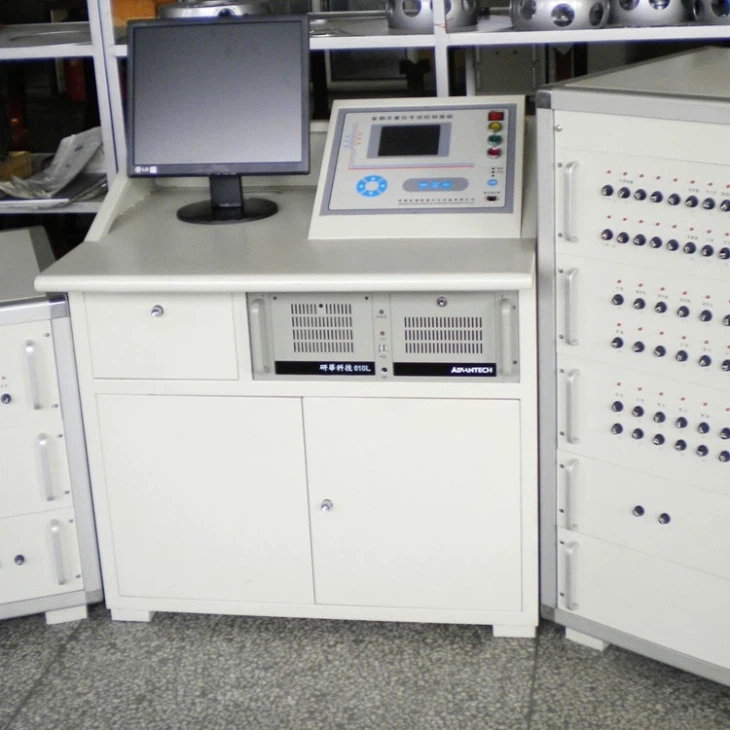
But it's not all sunshine and rainbows. There are a few challenges too. One of the main issues is the space requirement. You need a large enough room to install the dome and the projector. And not all educational institutions have the luxury of extra space. Also, there might be a learning curve for the lecturers to get used to the system. However, with proper training, these problems can be easily overcome.
Another thing to consider is the competition from online resources. There are many astronomy apps and websites that offer virtual sky tours. But let me tell you, there's nothing quite like the immersive experience of a real planetarium system. The 360 - degree view and the realistic projection on the dome can't be replicated by a small screen on a phone or a computer.
So, in conclusion, a planetarium system is an excellent tool for astronomy lectures. It offers a more engaging, interactive, and educational way of teaching astronomy. It can make the abstract concepts of the subject more tangible and can enhance the overall learning experience.
If you're an educator, an institution administrator, or someone interested in improving astronomy education, I highly recommend considering a planetarium system for your lectures. Whether you're running a small school or a large university, a planetarium system can bring a whole new level of excitement to your astronomy courses.
If you're interested in learning more about our Planetarium System, or if you want to discuss the possibility of purchasing one for your institution, don't hesitate to reach out. We're here to help you find the perfect solution for your needs.
References
- Many astronomy textbooks and research papers on educational technology in astronomy.
- Personal experience and knowledge as a Planetarium System supplier.


