


As a supplier of Multi Channel Projection systems, I often get asked about the viewing angle of these advanced projection setups. Understanding the viewing angle is crucial for both the design and the user experience of multi - channel projection systems. In this blog post, I'll delve into what the viewing angle of a Multi Channel Projection system is, its significance, and how it impacts various applications.
What is the Viewing Angle?
The viewing angle of a Multi Channel Projection system refers to the maximum angle from which an observer can view the projected image with acceptable visual quality. This angle is measured horizontally and vertically. In a single - channel projection, the viewing angle is relatively straightforward to define. However, in a multi - channel projection system, where multiple projectors are used to create a seamless large - scale image, the concept becomes more complex.
The viewing angle is affected by several factors. One of the primary factors is the projector's lens characteristics. Different lenses have different throw ratios and angles of projection. For example, wide - angle lenses can cover a larger area, resulting in a wider viewing angle. In a multi - channel setup, the arrangement and alignment of these projectors play a vital role. If the projectors are not properly aligned, the viewing angle may be limited, and there may be visible seams or distortion in the image at the edges of the viewing area.
Another factor is the screen material. The reflectivity and diffusion properties of the screen can significantly impact the viewing angle. A high - gain screen reflects light more directly, which can increase the brightness but may reduce the viewing angle. On the other hand, a low - gain screen diffuses light more evenly, providing a wider viewing angle but potentially sacrificing some brightness.
Significance of the Viewing Angle
The viewing angle is of utmost importance in various applications of Multi Channel Projection systems. In a Multi Channel Projection setup for a large - scale event or a public display, a wide viewing angle allows more people to view the content clearly from different positions. This is essential for maximizing the audience reach and ensuring that everyone has a good view of the projected image.
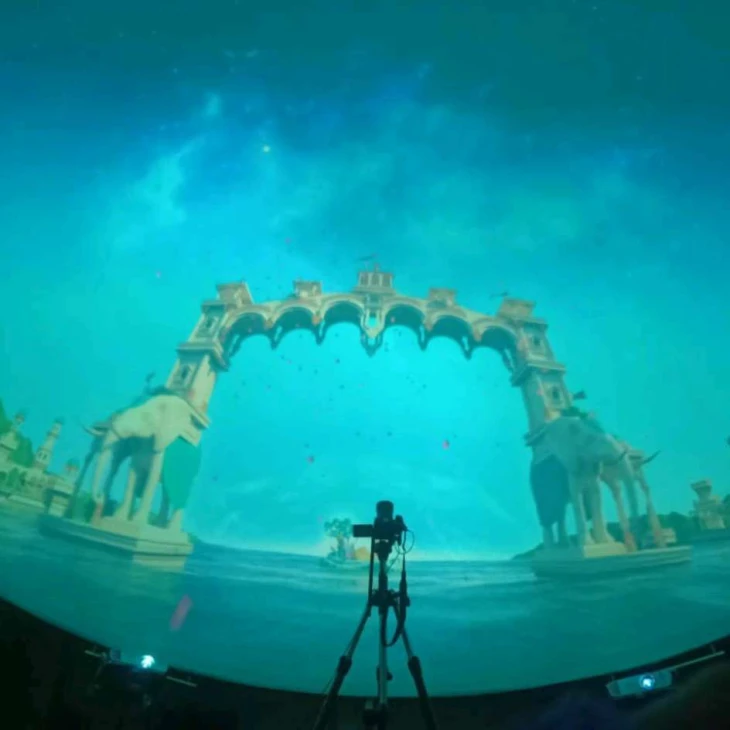
In immersive environments such as Multi - channel Fulldome Projection System used in planetariums or virtual reality experiences, the viewing angle determines the level of immersion. A wider viewing angle can create a more immersive experience, as it allows the user to feel more surrounded by the projected content. For example, in a planetarium, a wide viewing angle enables visitors to look up and around and feel as if they are truly in space, with stars and celestial objects visible across a large portion of their field of view.
In corporate settings, such as boardrooms or conference halls, a proper viewing angle is necessary for effective communication. Presenters need to ensure that all attendees can see the projected slides or videos clearly, regardless of their seating position. A limited viewing angle may result in some attendees having a poor view, which can lead to a loss of engagement and understanding of the presented information.
Impact on Different Applications
Entertainment and Exhibitions
In entertainment venues like theme parks or museums, Multi Channel Projection systems are used to create stunning visual displays. A wide viewing angle is essential here to attract and engage a large number of visitors. For example, in a museum exhibition, a multi - channel projection can be used to bring historical scenes to life. With a wide viewing angle, visitors can move around the exhibit and still have a clear view of the projected images, enhancing their overall experience.
Education
In educational institutions, Dome Theater Video Multi - channel Projection System are increasingly being used for teaching purposes. In science classes, for instance, a multi - channel projection can be used to simulate scientific phenomena such as the solar system or the process of cell division. A wide viewing angle allows students sitting in different parts of the classroom to view the projections clearly, facilitating better learning and understanding.
Military and Training
In military training, multi - channel projection systems are used to create realistic combat scenarios. A wide viewing angle is crucial in this context, as it allows trainees to have a more comprehensive view of the simulated environment. This helps in improving their situational awareness and decision - making skills.
Measuring and Optimizing the Viewing Angle
Measuring the viewing angle of a Multi Channel Projection system typically involves using specialized equipment. Light meters and cameras can be used to measure the brightness and image quality at different angles from the center of the projection area. By taking multiple measurements at various positions, a detailed profile of the viewing angle can be created.
To optimize the viewing angle, several steps can be taken. First, proper projector alignment is essential. This involves adjusting the position, tilt, and rotation of each projector to ensure that the projected images blend seamlessly. Advanced calibration software can be used to achieve precise alignment.
Secondly, selecting the right screen material is crucial. As mentioned earlier, the screen's properties can significantly impact the viewing angle. Conducting tests with different screen materials can help in choosing the one that provides the best balance between brightness and viewing angle for a particular application.
Conclusion
In conclusion, the viewing angle of a Multi Channel Projection system is a critical parameter that affects its performance and usability in various applications. As a supplier, we understand the importance of providing systems with optimal viewing angles. By considering factors such as projector lenses, screen materials, and proper alignment, we can ensure that our customers get the best possible visual experience.

If you are interested in our Multi Channel Projection systems and want to discuss how the viewing angle can be optimized for your specific needs, we invite you to contact us for a detailed procurement discussion. We have a team of experts who can provide you with in - depth information and guidance on choosing the right system for your application.
References
- Smith, J. (2018). Projection System Design and Optimization. Publisher: TechBooks Inc.
- Johnson, A. (2020). Immersive Visual Technologies. Publisher: Visual Press.
- Brown, C. (2019). Advances in Multi - Channel Projection. Publisher: Projection Science Publications.


