


Hey there! As a supplier of Fisheye Fulldome Projectors, I often get asked about the heat dissipation of these cool gadgets. So, let's dig into what heat dissipation is all about when it comes to a Fisheye Fulldome Projector.
First off, what's heat dissipation? In simple terms, it's the process of getting rid of the heat generated by a device. When a Fisheye Fulldome Projector is running, it's working hard to produce those amazing, immersive visuals. All that electrical activity creates heat. If this heat isn't properly managed, it can cause a whole bunch of problems.
One of the main reasons heat dissipation is crucial is to maintain the projector's performance. You see, excessive heat can mess with the internal components. For example, the high - intensity lamps or LEDs used in these projectors can be sensitive to heat. If they get too hot, their brightness can fade, and their lifespan can be significantly shortened. Nobody wants a projector that starts dimming after just a few hours of use, right?
Another issue related to poor heat dissipation is the potential for component failure. The electronic circuits inside a Fisheye Fulldome Projector are made up of delicate parts like capacitors, resistors, and microchips. When they're exposed to high temperatures for extended periods, they're more likely to break down. This can lead to costly repairs or even render the projector useless.
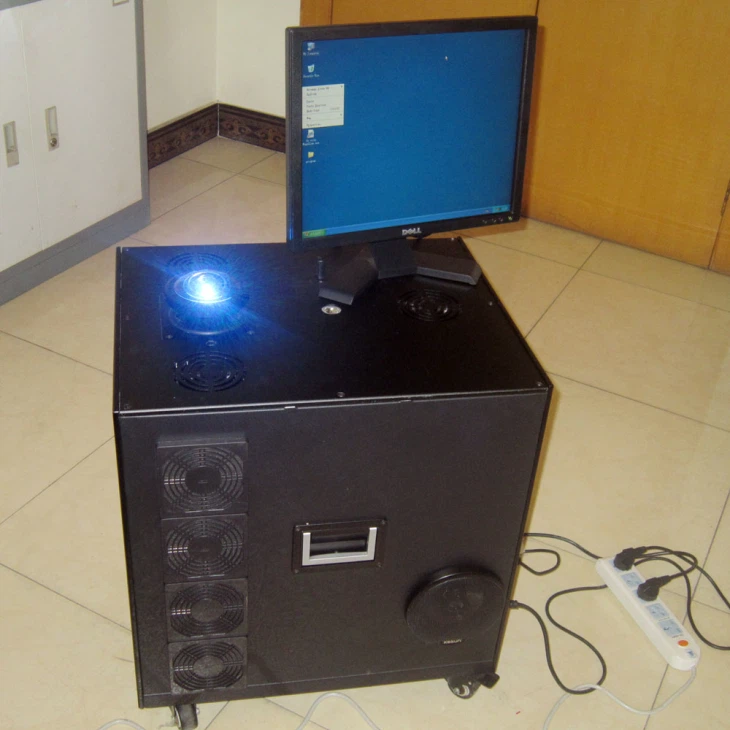
So, how do Fisheye Fulldome Projectors dissipate heat? Well, most of them use a combination of methods. One common method is the use of fans. Fans are pretty straightforward. They blow air over the hot components, carrying the heat away. The fans are usually strategically placed near the areas that generate the most heat, like the light source and the power supply.
Some projectors also have heat sinks. These are usually made of metal, often aluminum, which is a good conductor of heat. The heat sink absorbs the heat from the components and spreads it out over a larger surface area. This makes it easier for the fan to blow the heat away.
Liquid cooling is another option, although it's less common in consumer - grade Fisheye Fulldome Projectors. Liquid cooling systems use a coolant that circulates through pipes near the hot components. The coolant absorbs the heat and then transfers it to a radiator, where it can be dissipated into the air.
Now, let's talk about how heat dissipation affects the user experience. If a projector has good heat dissipation, you can use it for longer periods without worrying about performance degradation. This is especially important for educational institutions and planetariums that may have long shows or continuous use throughout the day.
For instance, our 6m Portable Planetarium Projector is designed with efficient heat dissipation in mind. It allows for extended use, making it perfect for schools and small - scale planetarium setups. The fans are quiet, so they won't disrupt your viewing experience.
Our Fisheye Lens Planetarium Projector also has excellent heat management. The heat sinks are designed to keep the internal components at an optimal temperature, ensuring consistent performance. Whether you're using it for a weekend star - gazing session at home or a professional astronomy presentation, you can rely on its stability.
Then there's the Inflatable Planetarium Projector for Schools. This projector is often used in classrooms, where students may be watching for long periods. Good heat dissipation ensures that the projector keeps running smoothly without any interruptions, making the learning experience better for everyone.
As a supplier, we understand the importance of heat dissipation in Fisheye Fulldome Projectors. That's why we invest a lot of time and resources in researching and developing the best heat - dissipation solutions. We test our projectors rigorously to make sure they can handle continuous use without overheating.
If you're in the market for a Fisheye Fulldome Projector, heat dissipation should be one of the key factors you consider. A projector with poor heat management may seem cheaper upfront, but in the long run, you'll end up spending more on repairs and replacements.
So, if you're interested in our Fisheye Fulldome Projectors and want to learn more about how our heat - dissipation technology works or have any other questions about our products, don't hesitate to reach out. We're here to help you make the best choice for your needs. Whether you're a school looking to enhance your astronomy curriculum or an enthusiast wanting to create a home planetarium, we've got the perfect projector for you. Let's start a conversation and see how we can meet your requirements!
References

- General knowledge about projector technology and heat management principles.
- In - house research and development data on Fisheye Fulldome Projectors.


